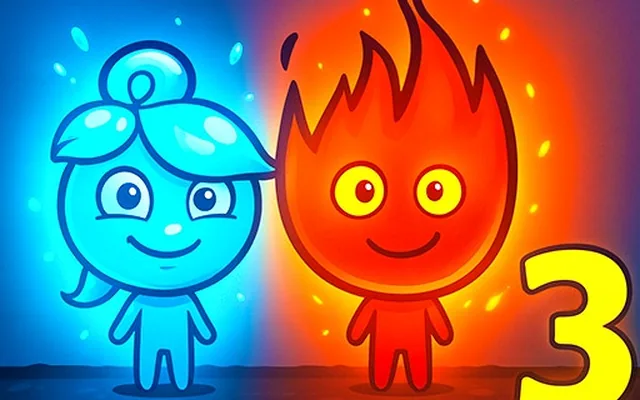
Fireboy and Watergirl 3: The Ice Temple takes the series' simple idea, two elemental heroes who must cooperate to escape, and adds a layer of frozen trickery that catches out even experienced players. Slippery surfaces carry your momentum further than you expect, frozen pools change the rules of which character can cross where, and the puzzles lean harder on timing between the two players. This guide explains the core mechanics, breaks down the most common puzzle types and shares the habits that turn a messy three-minute run into a clean A rank. You can play Fireboy and Watergirl 3 free on Classroom 6X, alone with two hands or with a friend on the same keyboard.
- Fireboy dies in water, Watergirl dies in lava, and green goo kills both; everything else is built on that rule.
- Ice reduces traction, so start stopping earlier and use short taps near ledges and hazards.
- Plan the route out loud before moving: who holds which button, who crosses first and who collects which gems.
The core rules of the Ice Temple
Every level asks both characters to reach their own exit door, the red door for Fireboy and the blue door for Watergirl. They must stand at their doors at the same time to finish. Along the way are gems in matching colours: red gems can only be collected by Fireboy and blue gems only by Watergirl.
The hazards follow a strict colour logic. Red pools of lava are safe for Fireboy but deadly for Watergirl. Blue pools of water are the reverse. Green goo is lethal to both. If either character dies, both restart the level, which is what makes cooperation so important. In the Ice Temple, frozen surfaces and icy slopes join the mix, and they reward careful movement far more than the earlier Forest and Light Temples did.
Controls and how to play solo
| Action | Fireboy | Watergirl |
|---|---|---|
| Move left | Left arrow | A |
| Move right | Right arrow | D |
| Jump | Up arrow | W |
| Pause | On-screen pause button | |
Playing alone is completely possible, it just changes your approach. Rather than moving both characters at once, move one to a safe spot, then bring the other across. Most puzzles are designed so that one character can wait on a button while the other progresses. Where both must move together, such as on a shared platform, use your left hand on WASD and right hand on the arrows and keep the movements short and deliberate.
Mastering ice and momentum
The biggest adjustment in this game is traction. On icy surfaces, characters keep sliding after you release the key. That changes three things:
- Stopping distance. Release the direction key earlier than you think, especially near pools or ledges. A small tap is often enough to nudge a character into position.
- Jumping. Momentum carries into jumps, so a running jump on ice goes further. This can help you clear wide gaps, but it also means overshooting a narrow platform is easy.
- Slopes. On downward icy slopes, a character can build speed quickly. If a hazard waits at the bottom, jump partway down or stop at the top and edge forward in short bursts.
Pay attention to how each character behaves on the frozen areas of each level. The Ice Temple uses its elemental theme to create puzzles where one hero can deal with the cold more easily than the other, so read the level before assuming the obvious route is the right one.
Common puzzle types and how to solve them
Buttons and moving platforms
Pressure buttons raise or lower platforms, but only while someone stands on them. The classic solution is a relay: one character holds the button so the other can cross, then the character who crossed finds a second button or lever to let their partner through. Before moving, identify which platform each button controls. Coloured markings usually link the two.
Levers
Unlike buttons, levers stay in position once pushed. That makes them ideal for solo players. The catch is that levers often need to be pushed back later to reset a path, so note which direction each lever was in when the level started.
Boxes and weights
Pushable boxes can hold down buttons, act as steps to reach higher ledges or bridge small hazards. A box on a button is effectively a free third player. Watch where you push boxes, because dropping one into a pit or wedging it in a corner can make a level impossible without a restart.
Timed sequences
Some rooms require both characters to move at nearly the same moment, such as crossing linked platforms that tilt with weight. Count down together if you are playing with a friend, or practise the motion slowly if you are solo. These are the rooms where ice punishes impatience the most.
How to earn better ranks
At the end of each level you receive a rank based on your time and whether you collected every gem. Getting the best result means balancing speed and completeness. The most reliable approach is:
- Play the level once purely to learn it, without worrying about time.
- Map out a route that picks up every gem with the fewest detours.
- Replay it, moving both characters in parallel whenever it is safe to do so.
- Skip unnecessary waiting by having one character start the next task while the other finishes the current one.
Speed comes almost entirely from parallel movement. In a cooperative session, split the level so each player has a clear job. Solo players can mimic this by alternating quick bursts of movement between the two characters rather than completing long stretches with one before switching.
Teamwork tips for two players
The Ice Temple is at its best with two people, but communication makes or breaks the experience. Call out plans before acting, especially around buttons. Agree on a default rule, such as Watergirl always waits while Fireboy checks ahead, so no one charges into a trap. When a level goes wrong, resist blaming each other and talk through what happened. The slippery surfaces mean most deaths come from momentum rather than bad decisions.
If you enjoy this style of cooperation, Classroom 6X has more to try. House of Hazards offers chaotic local multiplayer, Big Tower Tiny Square is a demanding precision platformer, Bad Ice Cream uses ice blocks as a core puzzle mechanic, and Vex 7 tests your reflexes on tricky obstacle courses.
Troubleshooting a stuck level
If you are truly stuck, step back and list every interactive object in the room: buttons, levers, boxes, platforms and gems. Most puzzles use every one of them. Next, ask which character can safely reach each object. Often the answer is that you have been trying to send the wrong hero first. Finally, remember that some gems are optional for finishing; get through the level first, then return for a perfect run.
FAQ
Can I play Fireboy and Watergirl 3 alone?
Yes. You control Fireboy with the arrow keys and Watergirl with WASD, so one player can move both characters. Move one hero to safety at a time and use levers and boxes to hold paths open.
What happens if one character dies?
The level restarts for both characters. Fireboy dies in blue water, Watergirl dies in red lava, and both die in green goo, so always check which pool is in front of which hero.
How do I stop sliding on the ice?
Release the movement key earlier than normal and use short taps to make small adjustments. Momentum carries you further on frozen surfaces, especially after running jumps and on slopes.